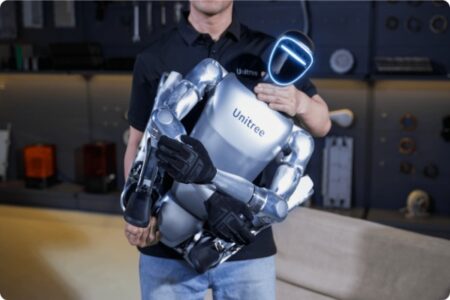
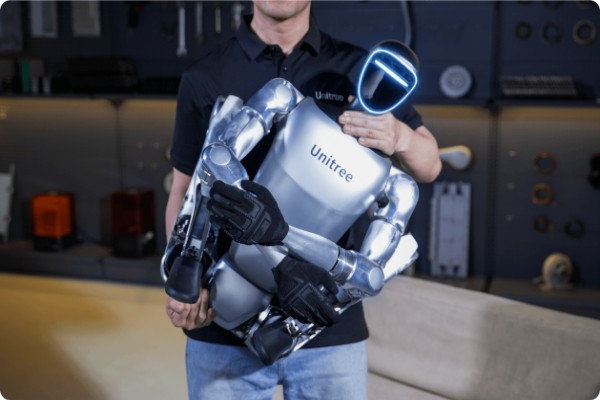

Robotics continues to move from research labs into real operational environments. Companies, universities, and research organizations now invest in humanoid systems that can assist with repetitive work, technical experimentation, and applied development. With platforms like the Unitree G1 robot, institutions now have a practical way to explore humanoid robotics without the complexity of building systems from scratch. These platforms support engineering teams, robotics researchers, and technology programs that want to experiment with mobility, sensing, and artificial intelligence in a structured setting. Recently, Xiaomi began testing humanoid robots in its electric vehicle factories to improve productivity. According to company president Lu Weibing, two robots can complete nearly 90 percent of certain assembly tasks within three hours while keeping up with a production cycle that releases a new car every 76 seconds. These robots are currently in early testing phases and function more like interns than full-production workers. The trial highlights how quickly companies are investing in humanoid robotics. Businesses and research institutions want systems that allow them to test automation in a controlled environment before scaling operations. This growing demand has also created interest in humanoid platforms designed for learning, experimentation, and technical development. Robotics solutions such as the Unitree G1 provide a reliable starting point for organizations that want to explore these possibilities. Structural Design of the G1 and Technical Features The G1 humanoid combines mobility, sensing, and computing features in a compact system that supports practical robotics development. Its structure allows users to test movement control, environmental awareness, and AI-driven responses within controlled environments. Major specifications of the robot are listed below: Height of 1.30 meters with a total weight of about 35 kilograms Movement speed reaching up to 2 meters per second for dynamic testing The Unitree G1 battery lasts roughly two hours per charge Depth cameras that support spatial perception and obstacle detection Integrated LIDAR sensors that assist with mapping and navigation Compact structure suitable for laboratories, demonstrations, and technical testing