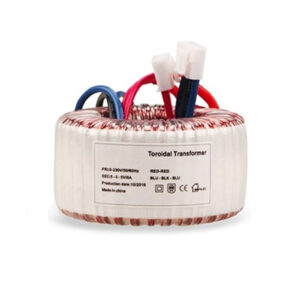
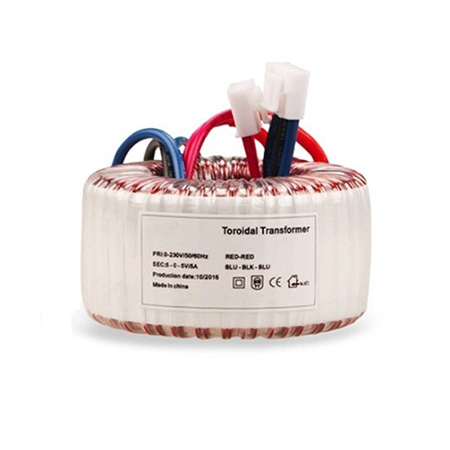

A toroidal transformer is a specialized electrical device characterized by its distinctive doughnut-shaped magnetic core, typically constructed from continuous grain-oriented silicon steel strips wound into a tight ring. Unlike conventional laminated transformers that use stacked E-I shaped laminations with inherent air gaps, the toroidal design creates a seamless, closed magnetic circuit that enables superior performance across numerous applications. The core construction provides remarkable efficiency advantages. The continuous magnetic path minimizes energy losses, allowing these transformers to achieve efficiency levels exceeding 95%, significantly higher than the 85-90% typical of standard laminated designs. This efficiency stems from reduced core losses and shorter winding lengths that decrease resistive losses. The design also results in transformers that are approximately 50% smaller and lighter than their conventional counterparts with equivalent power ratings, making them ideal for space-constrained installations. Electromagnetic performance represents another key benefit. The closed-loop core structure contains magnetic flux within the transformer, reducing stray electromagnetic fields to roughly one-tenth of those emitted by laminated transformers. This characteristic makes toroidal units particularly suitable for sensitive electronic environments. Additionally, the absence of air gaps and the uniform winding distribution minimize mechanical vibration and magnetostriction effects, resulting in virtually silent operation—a critical feature for audio equipment, medical devices, and recording studios.